美国恐怖故事
American teacher takes jar of sand as symbol of shared ground in forest he helped grow in China_我的网站

一 | 连刷几部AI剧,明明是不同角色却似曾相识。

二 |
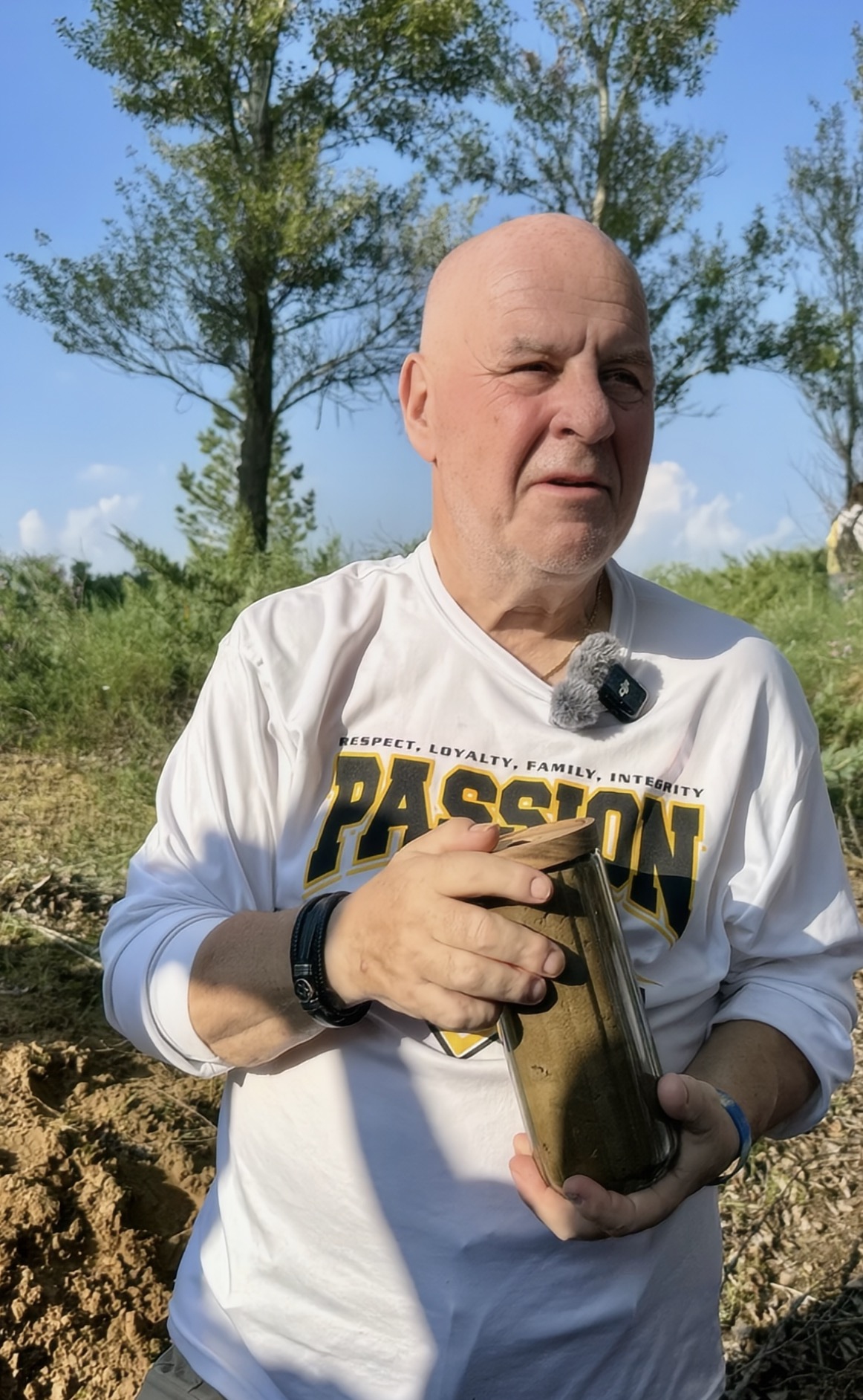
Ronald Sakolsky fills a jar with sand from the Mu Us Desert in Inner Mongolia, planning to bring it back to the US, on August 24, 2026. Photo: Lin Xiaoyi
On Monday afternoon, Ronald Sakolsky, an American teacher, set foot once again on the soil of the Mu Us Desert, in the Uxin Banner of Ordos, North China’s Inner Mongolia Autonomous Region. He first came here in 2000. Back then, the land was little more than drifting sand. Today, it is green with trees – a transformation driven by decades of local effort.
He stood within Sakolsky Forest, a woodland formally named to honor his early donation toward local ecological restoration. There, he carried out a plan he had held long before this trip: filling a jar with sand from the desert to bring home to the US.
More than two decades ago, sand was the one thing this place had in abundance. In 1999, when Sakolsky arrived in China as a participant in a bilateral teacher exchange program, he was moved by the tireless efforts of Chinese desert fighter Yin Yuzhen and her husband to curb desertification in the Mu Us Desert. He raised $5,000 – equivalent in 1999 to three years of income for Yin’s entire family – to fund their local tree-planting initiative.
The young saplings bought with that donation have since matured into more than 50,000 full-grown trees, transforming the once desolate, sandy wasteland into a thriving green landscape.
When Sakolsky met Yin at the airport on Sunday, 26 years after his first visit to Inner Mongolia, he joked that he could not take a tree from the Mu Us Desert, but he could slip some sand into his shoes and carry a piece of the land back with him. Now, he had found exactly the sand he wanted – not just any sand, but from a place where persistence had turned desert into life, and where his own name had become part of that story.
“Promise is a promise,” he said. “Ms. Yin made a promise, and she fulfilled it.”
For Sakolsky, the sand is not just dirt. It is a metaphor, a bridge, a shared ground. He plans to tell his grandchildren what it means. “It’s not just a piece of sand in the jar,” he said. “It’s a jar of love.”
He used the jar of sand to symbolize that America and China share a relationship rooted in the same soil. He shook the jar, holding its two ends as if they were the two countries, and said that it shows we’re all on the same planet.
There is an old American joke, he noted, that if you dig a hole deep enough, you will eventually reach China. “We’re all on the same planet,” he said.
Earlier that day, while visiting Yin’s home, he spoke about the need for Americans and Chinese to see each other as family. “All Americans should understand that Chinese people and Americans can be family,” he said. “We can transcend differences if we focus on our common ground. We all love our countries, and we all value loyalty and respect – these are the shared virtues we hold dear.”
As for the sand he collected, Sakolsky said he would treat it as a treasure, alongside all his other precious keepsakes from China. He expects to display it in his living room – a daily reminder of the forest that carries his name and the people who made it grow.
。近期,某短剧平台发布公告,明确AI剧角色创作应避免雷同,杜绝“千篇一律”。

三 | 事实上,此类AI同质化问题已从短剧行业蔓延至视觉设计、媒体运营等多个领域,不但引起大众反感,也阻滞了文化产业创新。 AI同质化泛滥,一方面在于技术降低了创作门槛,不少作者照搬成熟模板、复刻爆款内容以抢占市场、博取流量。另一方面,AI生成内容的版权归属和原创性判定标准不够完善,监督与管理存在滞后,助长了“拿来主义”。 长远来看,AI同质化内容无法形成合规可控的数字资产,难以支撑IP联名、内容共创、文创销售等商业价值挖掘。若放任此类内容,文化产业的原创力和竞争力将被不断稀释,既不利于平台精品化发展,也会打击创作者信心。

四 | AI可以提升生产效率,但故事内容、人物形象、美学风格等凝聚经验与创意的主要环节,仍需具备原创能力与精品意识的创作者主导。 作为内容审核与分发枢纽的网络平台,在避免同质化方面可发挥重要作用。

五 | 当前,不少平台已采取相关措施,提高对原创性、差异化内容的推荐权重,完善内容比对筛查和侵权快速处置机制。比如,有的平台上线筛查工具,在内容上线前对素材肖像权、版权预检,取得一定成效。 对内容创作者来说,除了要打造具有辨识度的精品原创IP,也要积极主动做好数字资产与IP确权工作,更好将创意能力转化为商业成果。相信在平台的规范和创作者的努力下,文化产业创新将会创造出更大价值。(覃皓珺)。
Current article:http://3gg.cuozubeishenjingli.cfd/na1/7xvcte.html
Published on:17:20:03




 发表于 16:14:01
 QQ好友和群
 QQ空间
QQ空间 腾讯微博
腾讯微博 腾讯朋友
腾讯朋友 收藏
收藏 支持
支持 反对
反对
 发表于 05:37:12


